Condition Guide · Atlanta, GA
A tweaked Achilles usually calms down with rest. But for a lot of runners, walkers, and people who are simply on their feet all day, the ache in the back of the ankle keeps returning — thicker, stiffer, and slower to warm up each time. That pattern points to tendinopathy: a tendon that has been quietly breaking down faster than the body rebuilds it.
Firsthand Account
A patient describes chronic Achilles tendon degeneration, the treatments that failed first, and the outcome after TenJet.
TenJet - Achilles Tendon Pain Case Experience and Patient Testimonial
Video courtesy of HydroCision, Inc., the maker of TenJet®. Individual results vary; this patient's experience is not a guarantee of outcome. Talk with a specialist about whether the procedure is appropriate for you.
Understanding The Condition
Where the pain sits tells the specialist a great deal. Some tendon breakdown occurs a few centimeters above the heel, in the mid-portion of the tendon; some sits right where the tendon meets the heel bone. They can behave differently and respond to different treatments, which is one reason a hands-on evaluation with imaging matters more than guessing from symptoms alone.
Where TenJet Fits
Loading programs and physical therapy resolve many cases of Achilles tendinopathy and are almost always the starting point. When they don't, TenJet — a HydroCision, Inc. device — lets a specialist address the degenerated portion of the tendon directly, in the office, and skip the extended downtime of open tendon surgery.
See The Procedure
Official demonstration video from HydroCision, plus a simple visual of how a healthy tendon differs from one in chronic degeneration — the state TenJet is designed to address.
TenJet Achilles & Plantar Fascia Tendinopathy — Procedure Technique


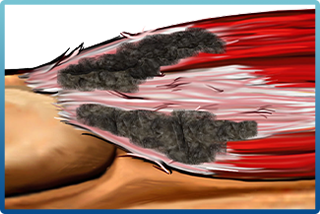
Diagrams and video courtesy of HydroCision, Inc.
Common Questions
It carries very high loads with a relatively modest blood supply, so accumulated micro-damage can outpace repair — particularly with a sudden increase in training or standing time.
It is how far the foot can flex upward. Restriction is common in Achilles problems, and published examinations record it as an objective marker alongside symptoms.
Both regions can be addressed. One published case treated calcifications at the mid-Achilles and then the distal insertion within the same session.
In that case pain fell from 7 out of 10 before the procedure to 3 out of 10 at four weeks, with continued improvement afterwards. Results vary between patients.
This information is general and is not medical advice. Whether any procedure is appropriate for you can only be determined by a physician who has examined you and reviewed your imaging.